


Ashen Pebble
Ashen Pebble
4 in stock
Couldn't load pickup availability
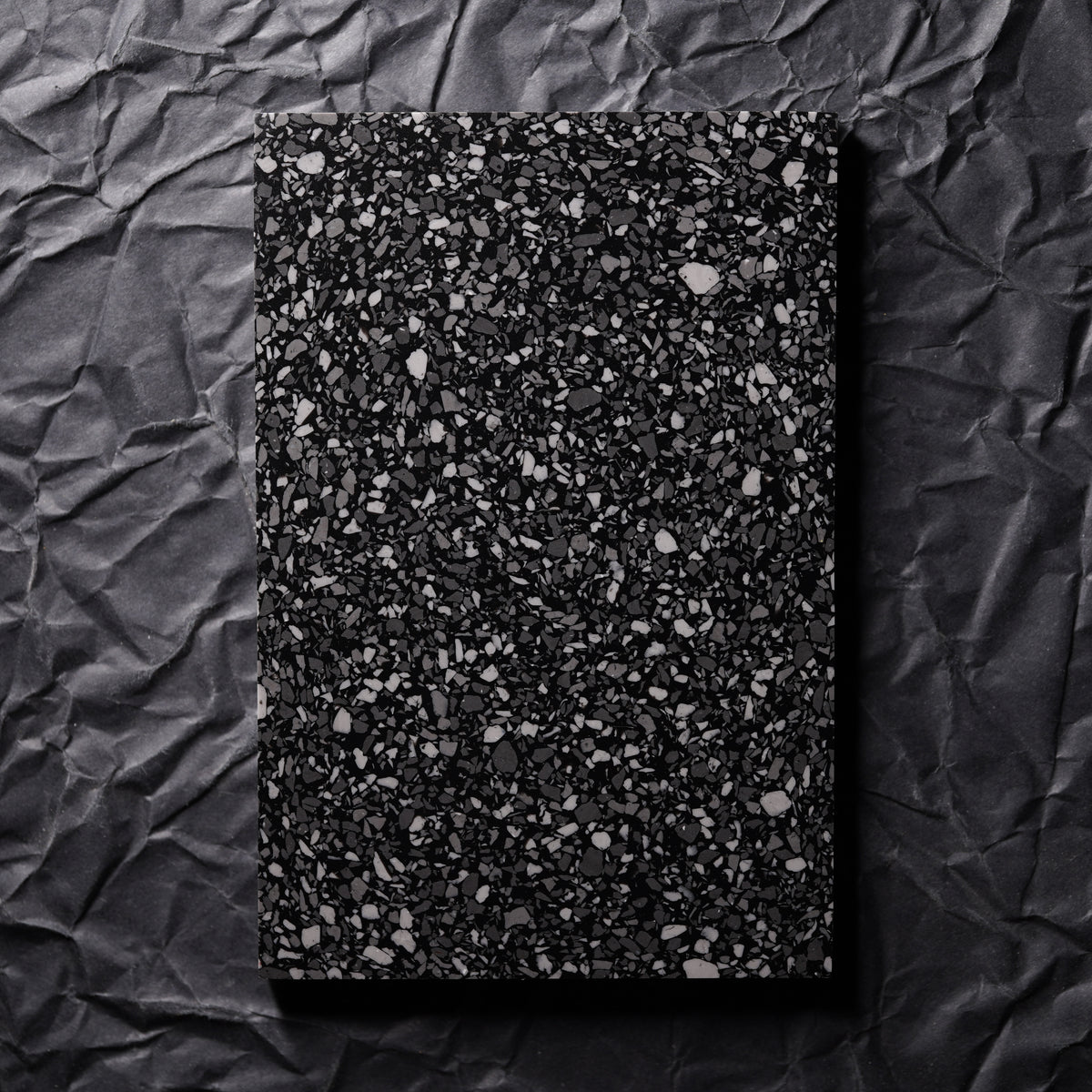
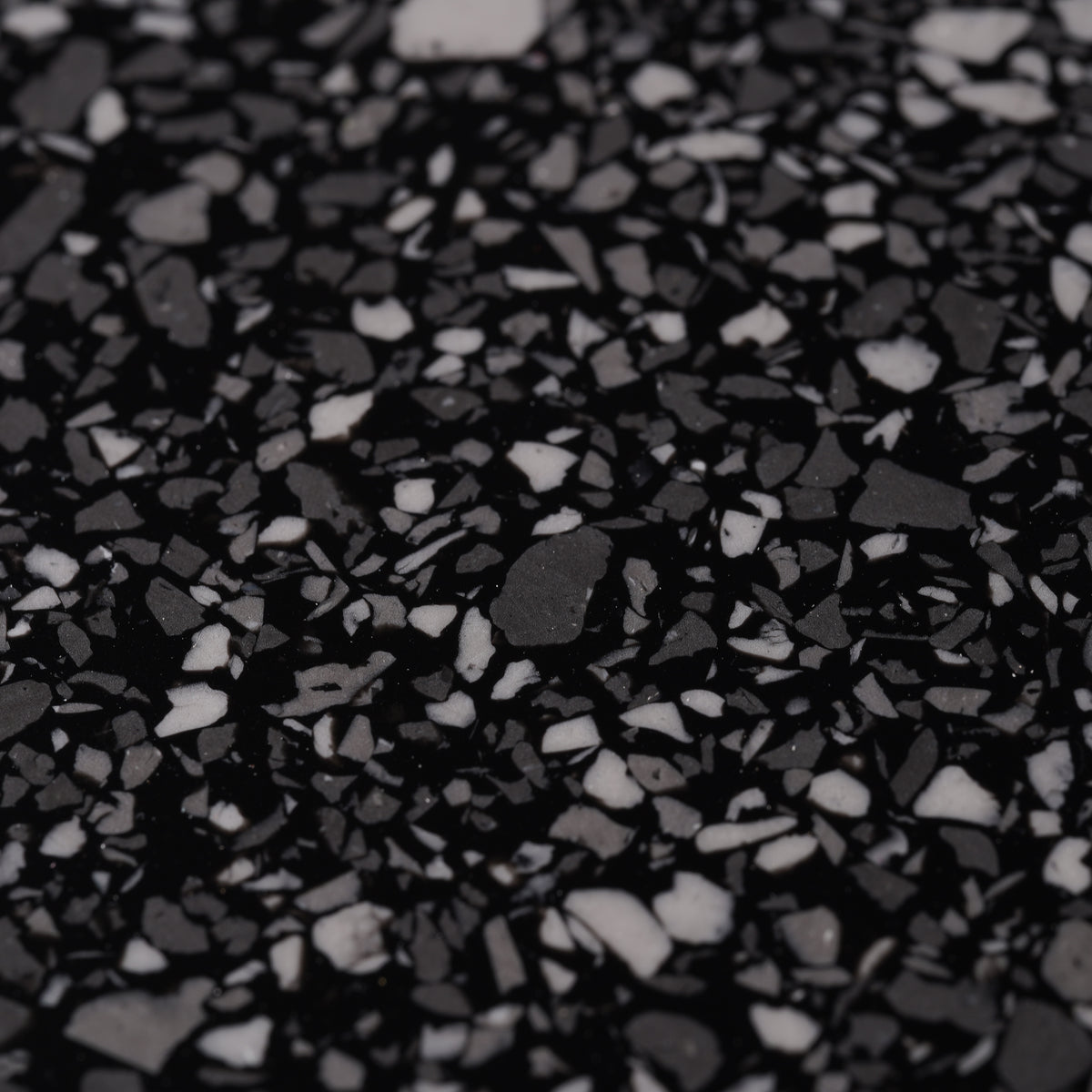
Bold and minimal, Ashen Pebble combines a sleek black base with contrasting gray fragments, creating a timeless monochrome look. The scattered pebble pattern gives it a natural stone aesthetic.
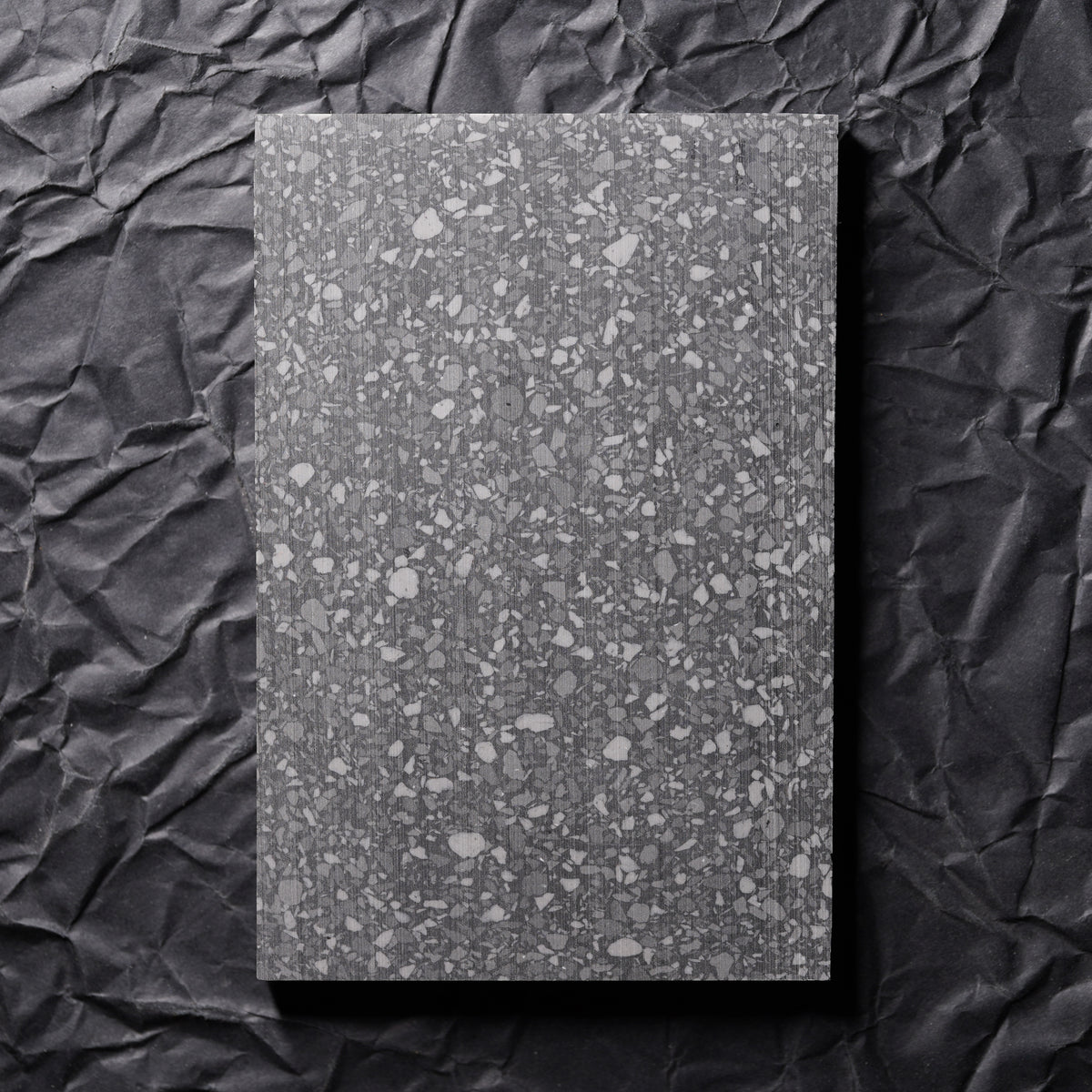
Each piece comes in a 6″ × 4″ slab, straight-line sanded to 80 grit on both sides and left unfinished, so very little prep is needed before you can start shaping or cutting for your project.
Polyclast machines smoothly with standard woodworking tools and buffs to a brilliant shine, offering the look of stone with the strength and consistency of engineered resin.
Each piece comes rough sanded to your selected size. Some styles may include tiny pits that can be filled with thin CA glue if a mirror finish is desired.
Key Features
-
100% Solid Urethane Matrix
Every block and scale is cast under high pressure using professional-grade, slow-curing urethane resin. This yields a void-free, monolithic material with an 80 Shore D hardness and balanced tensile strength.
-
Predictable & Machinable
Polyclast cuts, drills, taps, and shapes like dense hardwood or synthetic micarta. It won’t fracture unexpectedly under fasteners or along hidden cleavage planes.
-
Closed-Loop Sourcing
We incorporate our own pulverized, cured composite fragments and production dust back into new batches. This closed-loop process creates organic, irregular mineral textures that cannot be replicated through simple liquid pours.
Machining & Grinding Instructions
Shaping & Profiling (Belt Grinder)
Polyclast behaves similarly to dense micarta or stabilized hardwoods. It creates a fine, powdery swarf rather than long melting strands or brittle shards.
- Rough Shaping: 80 to 120 grit (Ceramic or Zirconia). Cuts rapidly and leaves a clean silhouette.
- Refining Contours: 220 to 400 grit (Aluminum Oxide or Structured Abrasive belts).
- Speed & Pressure: Run grinder at medium to medium-high speed with moderate, continuous pressure. Do not dwell in one spot to prevent localized heat buildup.
- Wet vs. Dry: Works cleanly dry. If using a misting system or dip bucket, water will not swell or degrade the composite.
CNC Machining
Polyclast behaves similarly to dense micarta or stabilized hardwoods. It creates a fine, powdery swarf rather than long melting strands or brittle shards.
The two primary mechanical priorities when milling Polyclast are chip evacuation to eliminate heat re-welding and rigid workholding to avoid slab vibration.
Tooling Selection
Material / Coating
Solid Micrograin Carbide (Uncoated, polished flutes, or DLC / ZrN)
High-speed steel (HSS) dulls prematurely on composite aggregates. Polished flutes or DLC coatings prevent plastic buildup and gumming.
Flute Count
1-Flute (O-Flute) or 2-Flute End Mills
3- and 4-flute tools lack the gullet clearance for plastic swarf, packing chips into the flutes and causing localized heat buildup.
Geometry
Upcut Spiral (roughing & pockets)
Downcut / Compression (perimeter profiling)
Upcut geometry pulls swarf out of deep pockets; downcut or compression bits prevent top-edge chipping along faceted clast boundaries.
Ball-Nose / Tapered
2-Flute Ball-Nose (3D contours & scales)
Leaves a smooth, uniform surface across multi-tone aggregate transitions without gouging.
Speeds, Feeds & Cutting Parameters
Baseline parameters for a 1/4" (0.250") 2-flute solid carbide upcut spiral on desktop/gantry CNCs (Shapeoko, Nomad, Avid, Tormach, Haas):
Roughing
16,000 – 18,000 RPM
90 – 120 IPM
1.0× Max Depth of Cut
20% Stepover
Slotting / Pocketing
14,000 – 16,000 RPM
60 – 80 IPM
.5× Max Depth of Cut
100% Stepover
Finish Pass (Walls)
18,000 – 20,000 RPM
50 – 70 IPM
1.0× Max Depth of Cut
0.010" – 0.015" axial stock
3D Contouring (1/8" Ball Nose)
18,000 – 20,000 RPM
60 – 90 IPM
0.030" – 0.05" Max Depth of Cut
8%-12% Stepover
3D Contouring (1/8" Ball Nose)
3,000– 5000 RPM
12 – 18 IPM
Peck cycle: 0.050" retract
Feed vs. Heat Management: Maintain positive feed pressure. Feeding too slowly causes the tool edge to rub and burnish rather than slice chips. Urethane softens when subjected to friction heat; letting a spinning cutter dwell will glaze the surface and weld swarf back into the cut path.
Chip Evacuation & Cooling
Best Practice: Compressed Air Blast (Cold Gun). Direct high-pressure air clears powdery chips from slots and pockets instantly, preventing re-cutting and keeping the cutter cool.
Flood / Mist Coolant: Water-soluble coolant runs cleanly. Polyclast is non-porous and will not swell or degrade in coolant baths.
Dry Cutting: Cleanly supported if paired with high-volume dust extraction at the spindle shoe.
Drilling & Pinning
- Drill Bits: Standard High-Speed Steel (HSS) or cobalt jobber bits. Brad-point bits produce exceptionally crisp entries.
- Drilling Speed: Moderate spindle speed (~800–1,200 RPM).
- Technique: Back the scale securely with a sacrificial wood block to ensure zero breakout on the exit hole.Clear chips frequently on deep holes.Counter-bore or chamfer pinholes lightly before driving mechanical fasteners.
Adhisives
- Glue Compatibility: Accepts standard two-part epoxies (G/flex 650, West System, standard 30-minute epoxy) and cyanoacrylate (CA).
- Bonding Prep: Scuff the bonding face with 60 to 80 grit paper to create mechanical tooth; wipe down with isopropyl alcohol (avoid harsh acetone soaks).
Finishing and Polishing Progression
Polyclast accepts finishes ranging from a grippy satin carry texture to a high-gloss, stone-like polish
Hand Sanding
Hand-block sand through 320 → 400 → 600 → 800 grit using wet/dry paper. For a durable, tactical/matte grip: Stop at 400–600 grit and buff lightly with a dry Scotch-Brite pad.
Buffing (Wheel Polish)
Use a clean, loose-muslin wheel running at 1,200–1,800 RPM. Apply light passes with White Diamond or Matchless pink compound. Finish with an untreated, dry muslin wheel for a deep, dimensional luster that exposes the internal strata matrix.
Topcoats / Sealers
None required. Polyclast is non-porous and naturally waterproof throughout the entire piece. Do not apply hardening oils (Danish oil, Tru-Oil) as they cannot penetrate the surface.
Safety and Handling
- Respiratory Protection: Always wear an N95 or P100 respirator when grinding, sanding, or sawing composite resin dust.
- Dust Collection: Use standard extraction at the tool rest.